Survey Reveals Pharmacist Mental Health Is Reaching a Breaking Point
As a pharmacy professional, you know the weight of a long shift, the emotional burden of being the final safety net for hundreds of patients,


Prescription discount cards have become a routine part of pharmacy life. Every day, patients use them to lower their out-of-pocket prescription costs. While great for patients’ pockets, the discount isn’t always beneficial for the pharmacy processing the claim.
These cards are marketed as a simple solution to high drug prices, but each discount shifts costs onto pharmacy teams and complicates operations. For many pharmacies, these transactions can result in reduced reimbursements, extra administrative work, and narrower profit margins.
Each discount shifts costs onto pharmacy teams and complicates operations.
Whether you’re an independent pharmacy owner or working behind the counter, understanding how these cards work and adapting to them has become essential to long-term survival.

Prescription discount cards are programs that let patients pay a reduced cash price for medications by accessing negotiated rates through a third party, such as a pharmacy benefit manager (PBM). They’re designed to help people save on prescriptions, especially those without insurance or facing high copays.
For pharmacists, these cards often surface unexpectedly (even when patients already have insurance coverage), requiring teams to compare prices, rerun claims, and explain confusing differences at the counter. While the intention is to lower patient costs, the added complexity often falls on pharmacy staff to manage in real time.
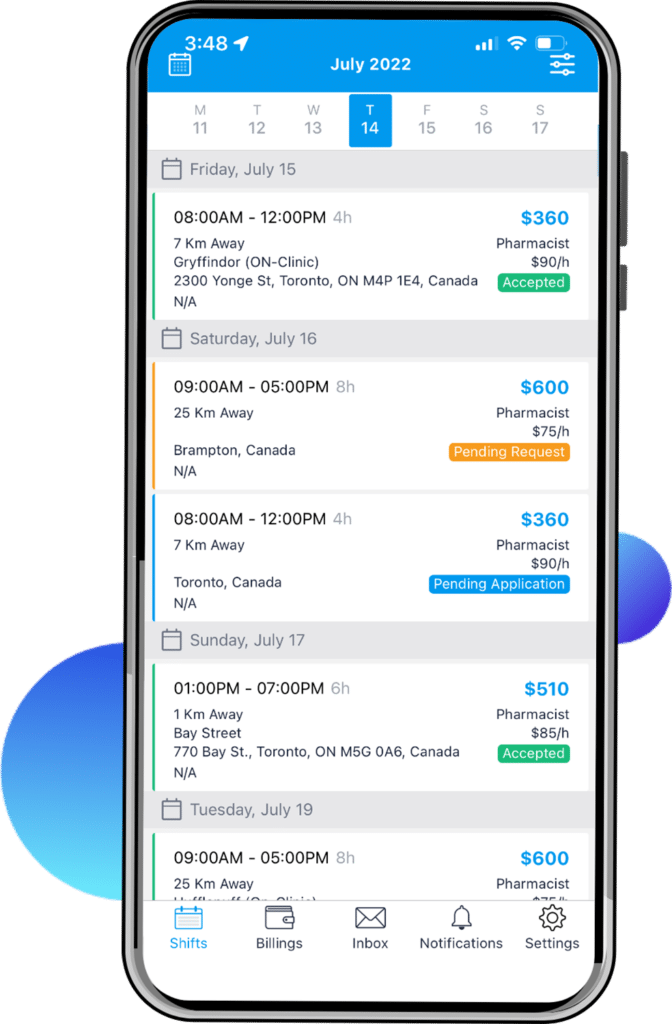
In busy community settings, that extra workload can strain small teams already balancing heavy dispensing and counseling demands — making efficient pharmacy staffing tools like ShiftPosts increasingly valuable.
Prescription discount cards first appeared in the 1990s, before Medicare Part D existed, to help seniors pay for medications. Since then, these cards have become a booming global industry worth $16.49 billion in 2024.1 And with prescription discount card use growing, the market is projected to more than double by 2034.2
As more patients turn to these programs to offset rising drug costs, pharmacies are processing an ever-growing share of claims that look simple to the patient but actually add layers of time, complexity, and cost.
In theory, a patient simply shows their prescription discount card or app to the pharmacist, the pharmacy runs it like insurance, and the patient pays a discounted out-of-pocket amount. But behind the counter, each transaction involves multiple intermediaries, additional claim steps, and reduced payment for the same amount of work.
Behind the counter, each transaction involves multiple intermediaries, additional claim steps, and reduced payment for the same amount of work.
Most discount cards are operated by PBMs or affiliate marketing companies that negotiate cash prices with pharmacies through network contracts and take a fee or “spread” from each transaction before reimbursing the pharmacy.
Here’s what this process looks like for pharmacy teams:





Claim submission: Card data entered and sent through a PBM network.
Eligibility check: PBM validates card and applies negotiated discount.
Price return: System displays the patient’s discounted amount.
Reimbursement: Pharmacy receives payment minus a PBM or card fee.
Follow-up: Staff handle extra submissions, price checks, and documentation, adding time to every fill.

To further complicate the process for pharmacies, not all discount cards work the same way. Understanding the differences helps pharmacies know what they’re really processing at the counter.
For patients, these discount programs feel empowering. But for pharmacies, they can feel more like a slow bleed, introducing extra processing steps, inconsistent pricing, and shrinking margins that add up over time. Fortunately, small pharmacies can mitigate these effects with flexible scheduling tools like ShiftPosts to manage workload spikes.
Small pharmacies can mitigate these effects with flexible scheduling tools like ShiftPosts to manage workload spikes.

Prescription discount cards can be a lifeline for some patients, but the benefits are uneven across the system. Knowing how each player is impacted can help pharmacy teams see the full picture behind each discount.
Discount cards often help uninsured or underinsured patients pay for essential medications they might otherwise skip. A national study found that 4.6 million prescriptions filled using discount cards produced nearly $200 million in total savings, averaging $17.80 (47.8%) per prescription.3
However, these savings come with tradeoffs:
The same study also found that most transactions occurred in lower-income, urban ZIP codes, with many involving opioids and benzodiazepines — a sign that affordability gaps can also amplify risks around medication misuse and fragmented care.
Meanwhile, the biggest financial winners are the PBMs and discount card companies themselves. Each swipe generates revenue, and unlike pharmacies, these intermediaries face minimal oversight.
Because discount-card companies aren’t considered healthcare entities, they’re not bound by HIPAA, meaning patient data can be shared or monetized. In 2023, the FTC fined GoodRx for sharing users' health information with advertisers, highlighting the lack of transparency in this space.4
Ultimately, the entities that set drug prices also profit from them, while pharmacies bear the cost.
More often than not, independent pharmacies process drug discounts at a loss because refusing a card risks losing the patient altogether. Each discount card transaction can add about five minutes of processing time, cutting into already thin margins and limited staffing hours that could be spent helping patients.5
While large pharmacy chains can afford to absorb thin margins in exchange for volume, most independent pharmacies can’t. For many, discount card claims can mean:


Reimbursements below acquisition cost (a $15 drug might return $5 after fees).
Dozens of unprofitable transactions per day.
Added claim-processing time that strains limited staff resources.
All of this makes it harder for community pharmacies to stay competitive and keep their doors open. It’s why many independents describe discount cards as “death by a thousand cuts.”
When staffing is already tight, platforms like ShiftPosts can help independents balance workloads by finding credentialed relief techs or pharmacists to cover busy periods without increasing fixed payroll.
Each individual position within the pharmacy is also uniquely impacted by prescription discount cards:
In short, patients get immediate relief, PBMs get consistent revenue, and pharmacies shoulder the operational and financial burden.

Despite its flaws, the discount card model continues to expand largely because patients need it. With rising copays, higher deductibles, and widening insurance gaps, millions of Americans rely on these programs to afford their medications.
In North America, where drug prices are among the highest in the world, discount cards have become an informal safety net. The generic discount card segment now dominates the market, mirroring the public’s demand for low-cost alternatives.6 And while this growth signals unmet need, it also exposes how little control pharmacies have over their own pricing reality.
Discount cards weren’t meant to fix prescription drug pricing — only to fill a gap. But when stopgap tools become the system, sustainability disappears.
No single pharmacy can fix a broken reimbursement system alone, but teams can take steps today to protect patients and their operations:
Start by identifying how discount cards impact your bottom line. Track how many transactions involve discount cards each day and calculate the real margin loss per claim. This data helps guide smarter decisions like adjusting workflow, retraining staff, or exploring alternative programs.
Some pharmacies are also taking control by launching in-house savings programs or direct cash pricing models. These offer patients consistent savings and allow the pharmacy to retain more control over data, pricing, and loyalty. Others are evaluating partnerships with discount card providers on their own terms, deciding whether to accept or reject certain cards based on profitability.
If you’re testing new programs or adjusting workflows, consider short-term relief shifts through ShiftPosts to cover administrative time or training hours without the payroll burden.

Patients often assume pharmacists control pricing, which can be frustrating when a third-party coupon shows a lower price. Equip your team to turn that confusion into a learning opportunity.
When patient traffic spikes or price disputes slow things down at the counter, on-demand staffing support through ShiftPosts can keep operations smooth and wait times short.
While individual pharmacies can’t control PBM practices, they can advocate for change. Support efforts that push for:
Participate in local and national pharmacy associations that are lobbying for these changes. A unified voice gives pharmacists more leverage to influence the policies that shape their business reality.

Now that claims often take longer and pay less, time is your most valuable resource. With staff already stretched thin, the ability to adjust staffing dynamically can make or break profitability.
ShiftPosts helps pharmacies offset low margins by providing flexible access to verified relief pharmacists and technicians. Whether to cover a lunch hour, manage weekend peaks, or fill short shifts during discount-card rushes, flexible relief staffing helps pharmacies stay productive without burning out their core team.
ShiftPosts helps pharmacies offset low margins by providing flexible access to verified relief pharmacists and technicians.
Discount cards are here to stay. Patients now expect to shop for prescriptions like they shop online, comparing prices across companies. The most successful pharmacies will find ways to adapt rather than resist.
Forward-thinking leaders are already:
Pharmacies that combine financial awareness, patient transparency, and operational adaptability will stay trusted and profitable in the long run.
Prescription discount cards fill a real affordability gap, but they’re a temporary patch on a broken system. While the industry continues to debate pricing reform and PBM transparency, independent pharmacies can take control through smarter operations, stronger patient education, and more flexible staffing through ShiftPosts.
With ShiftPosts, pharmacies can easily scale their teams up or down in real time. Our relief staffing platform gives owners, managers, and pharmacists the freedom to focus on patient care, staff support, and operational sustainability in an unpredictable system.
Join ShiftPosts today to stay adaptable, efficient, and focused on what matters most.



As a pharmacy professional, you know the weight of a long shift, the emotional burden of being the final safety net for hundreds of patients,

Turn Great Shift Coverage into a Stronger Talent Pool As a pharmacy leader, finding shifts to fill is one challenge, but building a strong talent

When the line at the counter is growing, the phone is ringing, a technician needs something verified, and a patient is frustrated about their copay,



Every pharmacy professional dreads the moment a pharmacist is unexpectedly

If weight loss were as simple as selecting the right