How Pharmacists Are Becoming Clinical Stewards of Cell and Gene Therapy
Over the last decade, cell and gene therapies (CGT) have transitioned from experimental breakthroughs to clinical care, changing what it means to be a pharmacist.


When the line at the counter is growing, the phone is ringing, a technician needs something verified, and a patient is frustrated about their copay, two pharmacists can have the same clinical knowledge and face the same time pressure, yet produce very different outcomes.
One responds in a clipped, transactional way: “We’re short-staffed. It’ll be ready when it’s ready.” Another’s response is efficient but empathetic: “I know the wait is frustrating. We’re verifying a safety check right now, and it’ll be about ten minutes.” The workload and the policy stay the same, but the impact is vastly different.
That difference is emotional intelligence (EI). In pharmacy, emotional intelligence is the ability to recognize what’s happening emotionally in yourself and others, and to respond in ways that protect patient safety, communication, and team dynamics. EI shapes how you counsel patients, handle stress during a busy shift, give feedback to a technician, and make decisions under pressure.
"In pharmacy, emotional intelligence is the ability to recognize what’s happening emotionally in yourself and others, and to respond in ways that protect patient safety, communication, and team dynamics."
In this article, we’ll explore what EI means in pharmacy practice, why it’s connected to job performance and patient outcomes, the core skills behind it, and how human colleagues and emerging artificial intelligence (AI) can support or undermine it.
When we talk about emotional intelligence in pharmacy, we’re not referring to personality, charm, or natural warmth. Emotional intelligence is a skill that involves regulating your response to stressful situations, thinking clearly, and taking effective action.

In a pharmacy environment, that means:

Staying composed under pressure

Communicating in a way that reduces confusion

Managing tension without disrupting care
You might see technical skills as more valuable than emotional intelligence for pharmacy performance, but recent research highlighted by the Financial Times shows that strong social skills have become more important than quantitative skills for labor market success.1 In other words, the ability to work with people effectively is now a more significant determinant of pharmacy outcomes.
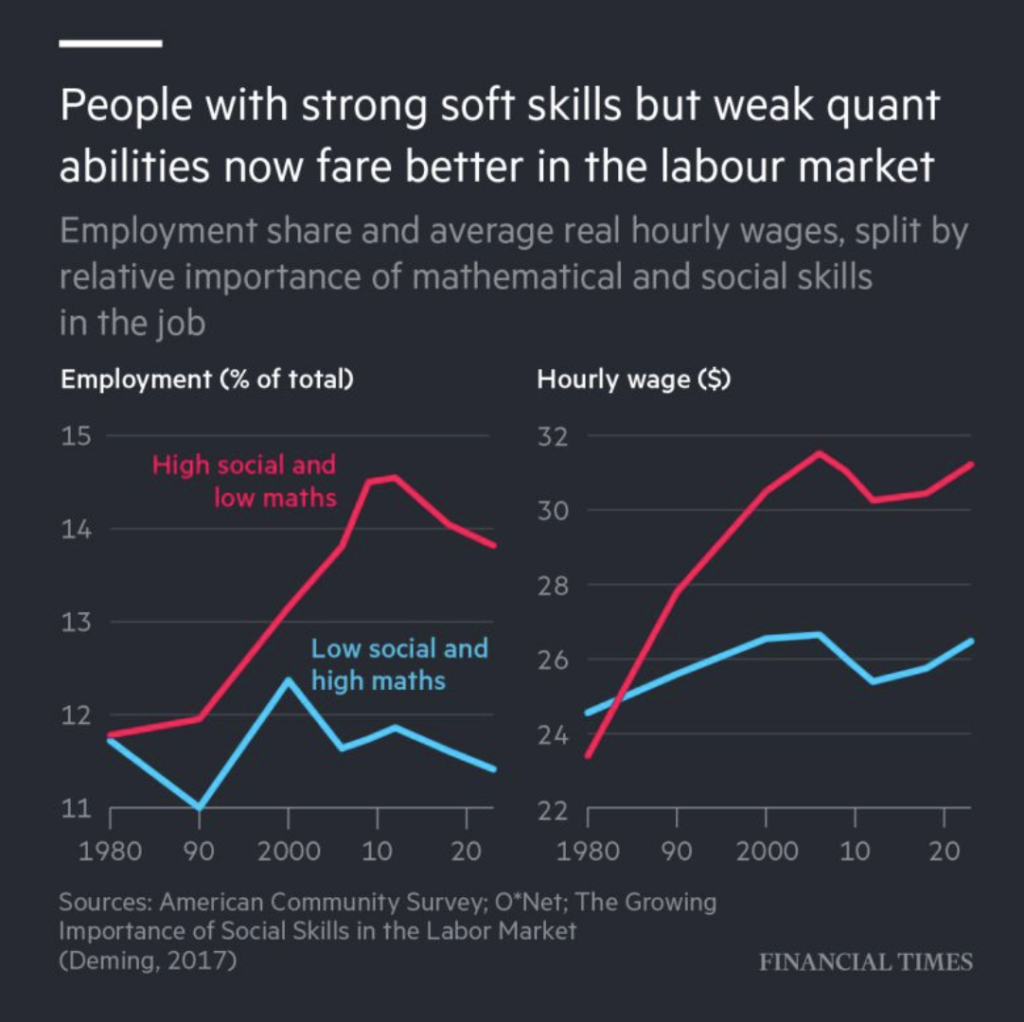
"Strong social skills have become more important than quantitative skills for labor market success."
To be clear, emotional intelligence doesn’t eliminate the need for clinical expertise — but it does determine how that expertise shows up in conversations, corrections, conflicts, and stressful moments.
To sum it up, here’s what emotional intelligence is and isn’t:
Every interaction carries clinical and emotional information. How a pharmacist responds influences whether a patient speaks up, whether a technician reports a near miss, and whether stress sharpens focus or clouds it.
EI shapes how pharmacists deliver clinical judgment, directly affecting:

Patient safety
Medication adherence

Team performance

Burnout risk and retention

Ethical decision-making
Emotional intelligence also influences individual career progression. In a cross-sectional survey of pharmacists, higher emotional intelligence scores were associated with higher job performance.2 Performance drives advancement, leadership opportunities, and professional credibility, which makes EI a career asset rather than just a communication skill.
The sections below break down how emotional intelligence impacts safety, cognitive load, and team dynamics in everyday pharmacy practice.
Pharmacists regularly encounter patients who are anxious, confused, frustrated, or overwhelmed. Those emotional states influence whether a patient hears instructions, asks questions, and takes their medications correctly.

Emotional intelligence enables pharmacists to:
When a patient feels respected and understood, they’re more likely to ask for clarification and follow their medication routines. On the other hand, emotional misalignment can result in therapy gaps, escalated conflict, and unsafe medication use.
It’s also worth noting that, in the annual Gallup poll of trusted professions, patients now rank pharmacists above primary care physicians for honesty and ethical standards.3
That level of trust makes emotionally intelligent communication even more important, since patients are actively listening and relying on what pharmacists say.
Pharmacy practice involves constant interruptions, staffing pressures, and operational demands. Clinical accuracy depends not only on knowledge but also on mental clarity under strain.
EI supports:
Without emotional regulation, cognitive performance declines, decision fatigue increases, and burnout accelerates. EI helps pharmacists recognize stress before it spills into reactivity, protects focus during high-volume shifts, and supports steadier judgment when tradeoffs feel uncomfortable.
In many cases, burnout is intensified by understaffing and unpredictable scheduling. Having access to relief pharmacists and technicians can reduce overload and protect emotional bandwidth. Tools that make it easier to find and fill pharmacy shifts help prevent the compounding stress that undermines regulation and decision-making.

Pharmacists supervise technicians, interns, and often float staff. The emotional tone set by the pharmacist influences how the entire team functions.
Emotional intelligence drives:
When technicians feel comfortable speaking up about their confusion or concern, error risk decreases. Standards remain high without eroding morale when feedback is direct but respectful. Over time, that stability supports both retention and performance.
Staffing stability plays a role here as well. When pharmacies can connect with qualified relief pharmacists during coverage gaps, it reduces tension and allows teams to focus on patient care rather than scrambling for support.
With a working understanding of emotional intelligence, it’s time to decide for yourself where you naturally excel and where you might be unintentionally falling short.
EI manifests as specific, observable behaviors during shifts. When you break it down into core components, it becomes easier to recognize your strengths and identify areas to strengthen. The competencies below reflect what emotional intelligence looks like in everyday pharmacy practice.
Self-awareness is the foundation of EI. It protects clinical accuracy and interpersonal professionalism by preventing stress from shaping tone, decisions, or communication. If you can’t recognize what’s happening internally, you can’t regulate it effectively.
Self-awareness means the ability to:
A pharmacist who is self-aware can sense when irritation is rising or when cognitive fatigue is setting in and adjust before it impacts patient care.
Once you recognize an emotional response, regulation is what determines what happens next.
Self-regulation means:
Pharmacists are often the emotional anchor in the pharmacy. Strong regulation preserves clarity under pressure and prevents unnecessary escalation.
Empathy is the ability to understand what someone else may be experiencing without absorbing it yourself. It doesn’t mean lowering standards or excusing unsafe behavior. It means responding to the full context of a situation.
In practice, that looks like:
Empathy improves outcomes without necessarily increasing counseling time. Often, a small shift in acknowledgment changes the outcome of an interaction.

Emotional intelligence becomes visible through communication. The way something is said often determines whether or not it’s heard and understood. Many patient complaints and medication misunderstandings stem from communication breakdown, not clinical incompetence.
Communication and de-escalation involve:
Effective communication reduces the need for repeat explanations, complaints, and escalations, protecting both safety and workflow efficiency.
Whether formally titled a manager or not, pharmacists lead every shift. Their response to pressure becomes the model others follow.
Collaborative leadership includes:
Team stability and continuity directly affect patient experience and safety. When the team feels psychologically secure and professionally supported, performance improves across the board.
Emotional intelligence isn’t just an individual skill set. It’s shaped and influenced by the people and systems around the pharmacist. Technicians, managers, float staff, and increasingly AI-driven tools all influence how consistently EI can be practiced during a shift.

In pharmacy today, emotional performance is rarely determined by a single person; it’s reinforced through team dynamics and workflow design.
Human Agents (Technicians, Managers, Float Pharmacists)
Pharmacy is collaborative by nature. The way team members communicate, correct mistakes, and respond to pressure directly affects emotional tone and psychological safety.
When emotional intelligence is present across the team:
More specifically, technicians speak up earlier about questions before they become errors, and float pharmacists integrate faster because expectations are communicated rather than implied.
But when EI is absent:
Flexible staffing ecosystems like ShiftPosts that allow pharmacies to find and fill pharmacy shifts quickly can help reduce last-minute stress and stabilize team dynamics, reinforcing emotionally intelligent practice rather than reactive behavior.
AI and Digital Agents as a Support, Not a Substitution
Emotional intelligence is a human competency, but whether it thrives depends on the system in which it operates. AI is now part of that ecosystem. Automated refill reminders, intake triage tools, scheduling systems, documentation support, and workflow prioritization software increasingly shape the pharmacist’s day.
Here’s what AI does well:
What AI cannot do:
"When technology reduces noise and human teams communicate effectively, pharmacists have more capacity to apply judgment, regulation, and empathy where they add the most value."
Emotional intelligence flourishes when systems support it. When organizations intentionally design for cognitive clarity, communication, and psychological safety, pharmacists are far more likely to apply their skills consistently and sustain them over time.
Organizations should:
Design workflows that preserve mental bandwidth: Constant task-switching and unmanaged interruptions erode emotional regulation. Smarter workflow design protects focus and decision quality.
Provide EI training as a clinical skill: Emotional intelligence should be taught and reinforced like communication, compliance, or safety protocols.
Align staffing models with safety priorities: Chronic understaffing forces reactivity, while sustainable staffing allows regulation, clarity, and thoughtful patient engagement.
Use technology as a protective buffer: AI and automation should reduce friction and cognitive load, not add new layers of urgency or monitoring stress.
Encourage psychologically safe communication: Teams must feel safe raising concerns, reporting near misses, and asking for help without fear of blame.
This also means rethinking how coverage gaps are handled. Access to flexible staffing networks like ShiftPosts allows pharmacies to respond to demand without chronically overloading existing teams, protecting safety and emotional sustainability.
Emotional intelligence allows pharmacists to deliver safe, effective care under pressure, but it’s difficult to practice consistently in systems that are chronically understaffed or operationally strained. Supporting EI comes down to building environments where pharmacists have the mental bandwidth to think clearly and lead well.
That’s where sustainable staffing becomes part of the equation. ShiftPosts helps pharmacies reduce coverage gaps and prevent overload by connecting them with qualified pharmacists and technicians when they need support. When teams aren’t stretched past capacity, emotional regulation, patient-centered communication, and sound clinical judgment become easier to sustain.
If you’re looking for ways to build a more stable, sustainable pharmacy environment, whether as a pharmacist or a pharmacy leader, explore flexible staffing solutions like ShiftPosts as part of your broader strategy for sustainable pharmacy practice.



Over the last decade, cell and gene therapies (CGT) have transitioned from experimental breakthroughs to clinical care, changing what it means to be a pharmacist.

As a pharmacy professional, you know the weight of a long shift, the emotional burden of being the final safety net for hundreds of patients,

Turn Great Shift Coverage into a Stronger Talent Pool As a pharmacy leader, finding shifts to fill is one challenge, but building a strong talent



Every pharmacy professional dreads the moment a pharmacist is unexpectedly

If weight loss were as simple as selecting the right