How Pharmacists Are Becoming Clinical Stewards of Cell and Gene Therapy
Over the last decade, cell and gene therapies (CGT) have transitioned from experimental breakthroughs to clinical care, changing what it means to be a pharmacist.


As a pharmacy professional, you know the weight of a long shift, the emotional burden of being the final safety net for hundreds of patients, and the resilience it takes to show up day after day. You are the heartbeat of community health, and your dedication changes lives.
But a new survey reveals that the mental health toll of pharmacy work is reaching a breaking point. In a survey of over 4,300 pharmacies and 1,600 staff members, nearly 70% of pharmacists report worsening mental health, with one in four saying they can barely cope.1 That level of sustained emotional fatigue, psychological strain, and chronic workplace pressure can have serious consequences, affecting everything from personal well-being and patient safety to long-term mental health outcomes across the profession.
"Nearly 70% of pharmacists report worsening mental health, with one in four saying they can barely cope."
For too long, pharmacy culture has demanded near-perfection under immense pressure, often leaving the person behind the counter feeling unsupported. That strain is increasingly tied to higher rates of anxiety, depression, and suicide among pharmacy professionals.
Fortunately, these numbers are igniting a long-overdue conversation about workplace safety, mental health support, and the need to protect our healers. Let’s look at what the research tells us so we can build a safer, more compassionate, and more sustainable future for the pharmacy profession, with less of a toll on mental health.
In the conversation about mental health and psychological well-being in healthcare, full-time and relief pharmacists are often the forgotten frontline, despite the emotional labor they carry.2 Every shift, you absorb a lot from the people you serve, including:
Patients’ fears about diagnoses
Frustration over medication costs
Confusion about insurance

The heartbreak of patients who can’t afford needed treatments
This burden is too great for any one person to shoulder alone, and recognizing this pressure is a matter of both human compassion and public health.

As the final safety check in the healthcare system, your mental clarity is a clinical necessity. Studies indicate that chronic psychological strain and emotional exhaustion can impair focus, increase cognitive overload, and raise the risk of medication errors.3 Supporting your mental health is the most effective way to protect your patients.
"We cannot have a healthy community without healthy pharmacists."
We cannot have a healthy community without healthy pharmacists. Without your expertise, patients lose a critical layer of advocacy and guidance. If the healers themselves are not cared for, the entire system of safety that communities rely on begins to break down.
In severe cases, the emotional and psychological strain pharmacists experience can contribute to devastating mental health outcomes.
Findings from the University of California, San Diego, show there are roughly 12 deaths by suicide for every 100,000 people in the general population. But for every 100,000 pharmacists, that number jumps to 20, meaning the rate of suicide for pharmacists is nearly double the national average. 4
"The rate of suicide for pharmacists is nearly double the national average."
Male pharmacists are also 25% more likely to die by suicide than men in other professions, while female pharmacy technicians are 22% more likely than women in the general population.5 These statistics represent our colleagues and friends.
"These statistics represent our colleagues and friends."
Understanding why pharmacists face elevated mental health risks is the first step toward meaningful change. When we recognize the unique pressures pharmacists face every day, we can begin to address them with better support systems, more empathetic workplace policies, and a culture that protects the people behind the counter.
Here are five primary pressure points that are unique to pharmacy work.
In pharmacy, chronic stress results from a sustained, high-pressure environment where the workload rarely slows. Research published in the Journal of the American Pharmacists Association (JAPhA) identifies excessive workload and inadequate staffing as the primary drivers of mental health straing — especially among retail and early-career pharmacy professionals.6
Chronic stress often manifests as a state of hyper-vigilance, in which the brain is forced to maintain accuracy amid constant interruptions. When corporate metrics prioritize speed over clinical safety, pharmacists are stripped of the time needed to pause and reset, which leads to cumulative cognitive exhaustion.
Here’s what might cause chronic pharmacy stress in practice:
For many pharmacies, the challenge is having the staffing flexibility to address these issues when they arise. Access to qualified relief pharmacists and the ability to find and fill pharmacy shifts quickly can make the difference between a sustainable work environment and one that pushes clinicians past their limits.
Research suggests that, oftentimes, pharmacy “burnout” may actually be moral injury — the psychological distress that occurs when forced to act in ways that conflict with professional ethics.7 In pharmacy, you enter the profession to be a healer and an advocate. Moral injury occurs when the system prevents you from being either.
This constant friction between the care you want to give and the care you’re permitted to give can lead to a sense of disillusionment and is a significant occupational risk factor for depression and suicidal ideation.
What this can look like in practice:
Pharmacists have a profound understanding of pharmacodynamics and direct, daily access to the medications they dispense. While this enables you to provide exceptional patient care, medication access and knowledge are also a unique and serious risk factor for those professionals facing a mental health crisis.

This is a known challenge across many high-level healthcare roles, and it’s exactly why proactive, de-stigmatized support is so vital. We must recognize that the very expertise that makes you an exceptional provider also makes you more vulnerable during a mental health crisis.
"We must recognize that the very expertise that makes you an exceptional provider also makes you more vulnerable during a mental health crisis."
Pharmacy is a unique clinical environment where you are often the most accessible provider to the public, yet the most isolated from your peers. Although you’re surrounded by technicians or a line of patients, you may be the only clinician on duty and carry the final responsibility for every decision made.
Without a peer standing beside you to share the cognitive load or validate the stress of a difficult interaction, that pressure has nowhere to go. Studies reveal that professional isolation is a key contributor to anxiety and declining psychological well-being among pharmacists, as it prevents the natural emotional processing that happens in other medicalenvironments.8
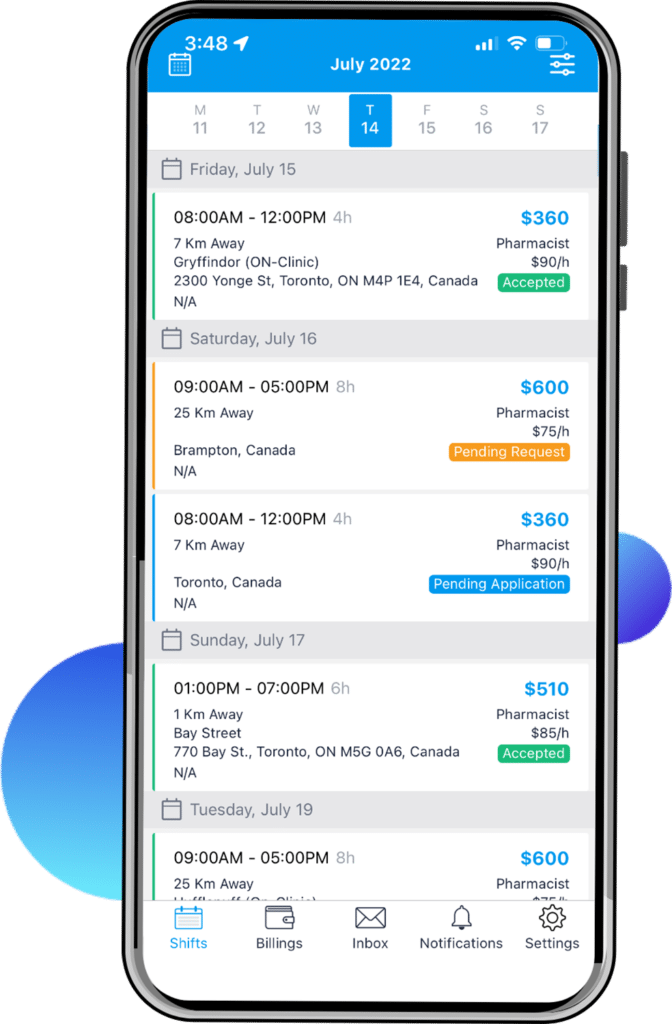
In many communities, flexible staffing models and solutions like the ShiftPosts platform are helping address this isolation by allowing pharmacies to bring in on-demand pharmacy help, reducing the burden on a single pharmacist to carry the entire operation.
The stigma around mental health is an ongoing problem within the medical community. As a pharmacist, you’re trained to be the person with the answers, acting as the last line of defense for patient safety and remaining calm under pressure.
That’s why many pharmacists feel they have to wear a mask of invincibility to protect their careers. When the culture of a profession discourages vulnerability, it forces mental health struggles underground, where they’re harder to treat.9
"When the culture of a profession discourages vulnerability, it forces mental health struggles underground, where they’re harder to treat."
What this stigma might look like in practice:
Because pharmacists are trained to be always "on", distress rarely looks like an immediate collapse. Instead, it manifests as subtle shifts in behavior or a masking of symptoms through over-performance.

For employers and peers, recognizing these signs early is about noticing when a colleague is drowning in a high-pressure environment before they reach a point of crisis.
Signs to watch for include:
At the end of the day, it’s important to recognize that many of the mental health challenges pharmacists face are preventable when workplaces prioritize psychological safety, sustainable staffing, and emotional support. Sustainable change requires empowering the individual and reforming the workplace, valuing the healer as much as the healing.
When these two levels work together, pharmacies can create an environment where pharmacists thrive.
"Sustainable change requires empowering the individual and reforming the workplace, valuing the healer as much as the healing."
While you can’t control every systemic factor of your job, you can still take steps to protect your well-being. Prevention at the personal level means de-stigmatizing help and reclaiming professional boundaries.

Employers hold the power to change the environment. These measures can improve retention, reduce costly dispensing errors, and save lives.

Staffing platforms, relief coverage, and flexible scheduling can be the best protective factors for your workplace. When pharmacies can quickly find and fill pharmacy shifts with qualified relief pharmacists, they create the breathing room necessary for clinicians to rest, reset, and maintain safe patient care.
Solutions like the ShiftPosts platform help pharmacies access on-demand pharmacy support, allowing teams to respond quickly to staffing gaps while supporting pharmacist well-being.
Pharmacists dedicate their careers to the health of others. Protecting the people behind the counter requires systems that reduce mental strain, improve workplace support, and give pharmacy teams room to breathe.
If your pharmacy needs flexible staffing or relief coverage, the ShiftPosts platform makes it easier to access pharmacy help on demand.
With ShiftPosts, pharmacies can:

Connect with qualified relief pharmacists in their area
Quickly find and fill pharmacy shifts when unexpected staffing gaps occur
Maintain patient safety without overloading their core team
Explore the ShiftPosts platform today and see how easy it can be to find pharmacy help on demand.
Sources
1 https://pmc.ncbi.nlm.nih.gov/articles/PMC10076651/
2 https://news.northeastern.edu/2026/02/11/pharmacist-suicide-rates-high/
3 https://pmc.ncbi.nlm.nih.gov/articles/PMC12876136/
4 https://today.ucsd.edu/story/pharmacists-at-higher-risk-of-suicide-than-general-population-study-finds
5 https://academic.oup.com/ajhp/advance-article-abstract/doi/10.1093/ajhp/zxag006/8416933?redirectedFrom=fulltext&login=true
6 https://www.japha.org/article/S1544-3191(25)00098-6/fulltext
7 https://www.wpchange.org/resources/burnout-moral-distress-and-moral-injury-meet-in-a-pharmacy
8 https://pmc.ncbi.nlm.nih.gov/articles/PMC12702109/
9 https://www.ajpe.org/article/S0002-9459(23)02227-1/fulltext



Over the last decade, cell and gene therapies (CGT) have transitioned from experimental breakthroughs to clinical care, changing what it means to be a pharmacist.

Turn Great Shift Coverage into a Stronger Talent Pool As a pharmacy leader, finding shifts to fill is one challenge, but building a strong talent

When the line at the counter is growing, the phone is ringing, a technician needs something verified, and a patient is frustrated about their copay,



Every pharmacy professional dreads the moment a pharmacist is unexpectedly

If weight loss were as simple as selecting the right